OrielProductCustomersPricingBook a demo
Winter rates are here.
Flights, rail and hotels in one place.

HeadlineApproved
The calm way to travel for work.

/book-a-demoReady
South16 pages · about 4 minutes
Winter rates are here.
Flights, rail and hotels in one place.
The calm way to travel for work.
The headline is approved. The image is in the folder. The link is ready. Nobody should need to wait for a developer to put those three things on the page.
A useful editor gives your team control over the work they do regularly. The design still holds together. Bigger changes have a clear route back to the people who built it.
What matters is whether your team can finish a real update in your CMS.
Take this request into the demo:
Change the campaign headline, replace the image and send the button to our new booking page.
| What changes | What the editor should provide |
|---|---|
| Headline | A named field and the actual page preview |
| Image | A useful crop on desktop and phone |
| Button | Its label and destination, together |
DesktopPhoneThe calm way to travel for work.
Book a demoWatch the whole update.
A quick demo with the supplier’s perfect content can hide the steps your team will struggle with.
1Change what is there.
Headlines, images, links, biographies and contact details need straightforward fields.
2Publish something new.
A customer story, article or location needs a template with the right information already accounted for.
3Change how a page is arranged.
Reusable sections can give a marketing team room to build campaigns. Agree which combinations are supported and when a new layout needs design input.
Freedom is useful when it makes the next task easier. An empty canvas can simply move the design work onto your team.
A customer story can appear on its own page, the homepage and a related service page. Those views should draw from the same story record.
One source:
title · summary · image · approved quote.
Used in:
story page · featured work · related service.
Change the title in that record and check each place it appears. You should only have to change it once, with no copy left saying the old thing.
How a team of 300 moved its travel to Oriel
How a team of 300 moved its travel to Oriel
How a team of 300 moved its travel to Oriel
Travel policy for growing teams
Read: How a team of 300 moved its travel to Oriel
The calm way to travel for work.
Book a demoThe calm way to travel for work, wherever your team goes next.
This page needs a button label before it can go live.
Save draftPublishTry the changes that a polished demo avoids: double the headline length, use a portrait image and leave an optional field empty.
The page should still make sense on a phone. If an image needs a different crop, you should be able to see that before it goes live. If the page cannot work without a field, the editor should tell you what is missing.
Saving a draft and publishing it are different actions. Make it obvious which one you are about to take.
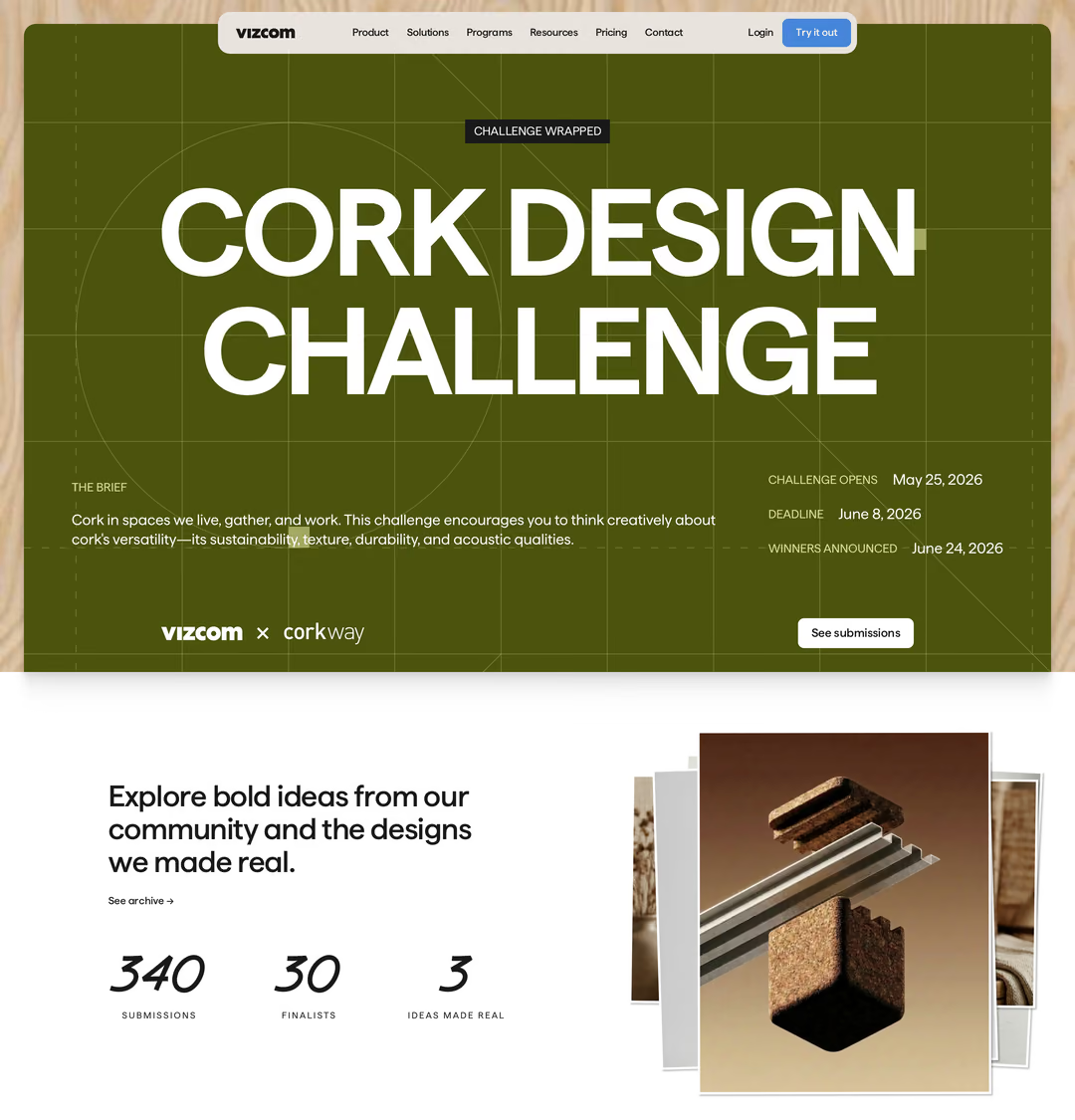
For Vizcom, South built a challenge hub inside the existing Webflow site, working from Vizcom’s designs.
The team selects the live campaign stage in the CMS. The page then presents the right content and calls to action as the competition moves through submissions, judging and results. The next stage does not mean rebuilding the page.
That is the principle we want an editor to serve: understand the recurring job, then make that job straightforward.
Webflow development and CMS by South. Design supplied by Vizcom. See the project ↗
For our custom builds, Sanity gives us a way to model the content and build editing controls around it. The fields, relationships, preview and publishing workflow still need designing for the people who will use them.
The test is your colleague opening the editor and completing the task they came to do.
Changing a published price is a content update.
Calculating a personalised quote is a new feature.
Publishing a story is a routine task.
Designing a new type of story may need a new template.
Agree those boundaries at the start. Your team should know what it can change confidently and where to bring a larger request, without finding out in the middle of a campaign.
Use your own account and your own content. Complete one update without coaching, preview it on a phone, publish it through the agreed review process and recover a deliberate mistake.
If you get stuck, that is useful feedback on the setup. Fix the setup and keep the routine edits with your team.
Leave with a short walkthrough of the tasks you actually do and a named route for help.
Show us two or three recent requests. We can work through which should be everyday edits, which need reusable sections and which deserve design or development time.
Book 30 minutes with ZacNext bookShould we move off Webflow or Framer?Looking forward to talking to you.