How do we move a big site without losing search traffic?
South18 pages · about 4 minutes
A search resultTravel policy guide for growing teams/blog/2019/policy-guide
A saved linkOriel rates 2019/downloads/rates.pdf
An old articleThe best tools for team travelLinks to /team-travel.html
An email sent years agoYour booking link/old-centre
The calm way to travel for work.
01
A migration starts with the site people already use
Some visitors arrive through your homepage. Others follow an old article, a saved link, a search result or a link in an email sent years ago.
The new design needs to account for those routes as well as its new navigation.
Nobody can promise that search traffic will never fluctuate. What you can ask for is a deliberate plan for the pages, content and actions that matter, and evidence that it has been followed.
02
Make a map before making changes
Bring together the site crawl, sitemap, CMS records and useful search and analytics data. They answer different questions: what exists, what is published, what gets found and what people use.
Include downloads, image assets, forms and connected tools. A page with little traffic may still contain the booking route your sales team sends every day.
For each important item, record its current address, its purpose, its destination and who can approve the decision.
03
Current address, and its new onePurpose, and who approves it
/about-us/aboutThe company storyMarketing
/blog/2019/policy-guide/guides/travel-policyStill found in searchContent
/team-travel.html/teamsThe main service pageMarketing
/files/rates.pdf/guides/rates.pdfSales send it every weekSales
Sending every retired page to the homepage loses the meaning of the original visit. If there is no equivalent content, make retirement a deliberate decision.
Everything to the homepage/old-centre/policy-guide/expired-offer/rates.pdf/ Homepage
Each to its own place/old-centre /locations/centre/policy-guide /guides/travel-policy/expired-offer 410/rates.pdf /guides/rates.pdf The visit keeps its meaning
06
89
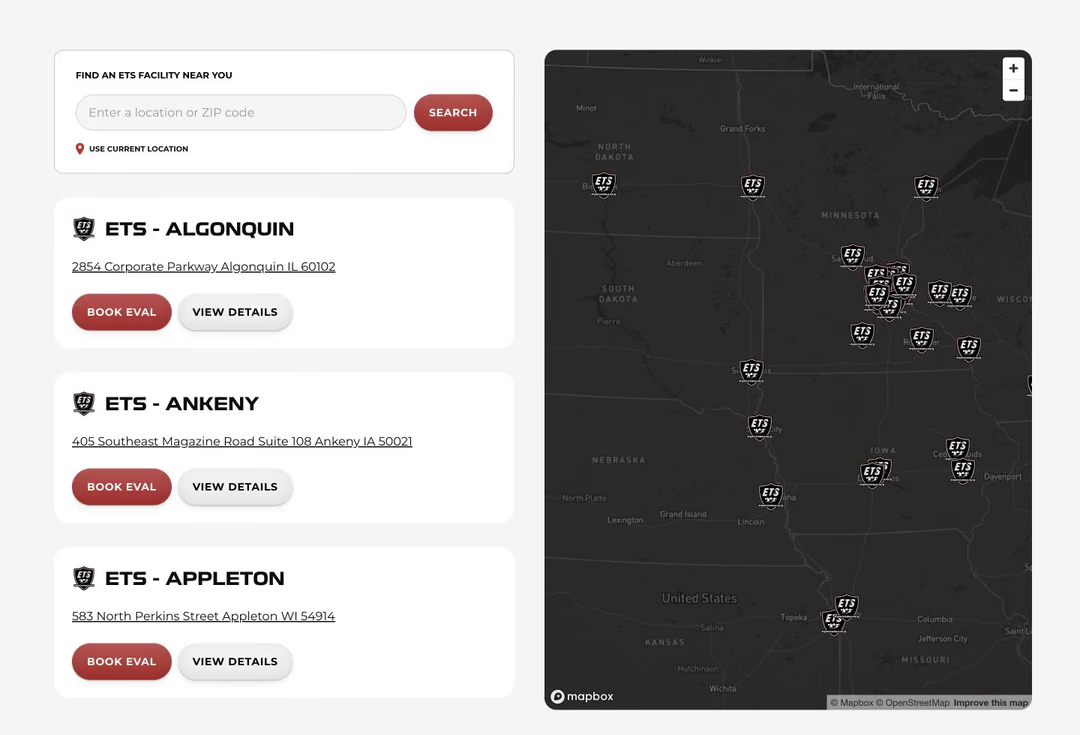
locations in the live directory, October 2026, each with a page of its own
etsperformance.com
07
Protect the whole journey
At ETS Performance, a visitor needs to find a location, understand its offer and reach the right booking services.
South mapped the existing Squarespace pages with the ETS team, agreeing what to keep or combine before rebuilding in Webflow. Shared location templates and a location finder connected the local details with the next step.
That whole route belongs in the migration checks. A working homepage would not prove it survived.
Design, Webflow development and migration by South. See the project ↗
08
/team-travel.html
Team Travel
Is Oriel right for a team of 300?
Yes. It’s built for companies of 50 to 2,000. Flights, rail and hotels in one place.
/teams
Is Oriel right for a team of 300?
Yes. It’s built for companies of 50 to 2,000.
Book a demo
Content decision
New offer for teams over 500: agreed, recorded.
09
Separate moving from rewriting
A new template should still answer the question that brought the visitor to the old page. Carry the important content, useful links and relevant search information across deliberately.
If the offer, audience or page purpose is changing too, record that as a content decision. Otherwise a missing section may be mistaken for a design choice, and a deliberate rewrite for a migration defect.
10
consensus.app
A long articleUnusual mediaAn entry with linked recordsOn a phone, then in the editor
11
Move a representative sample first
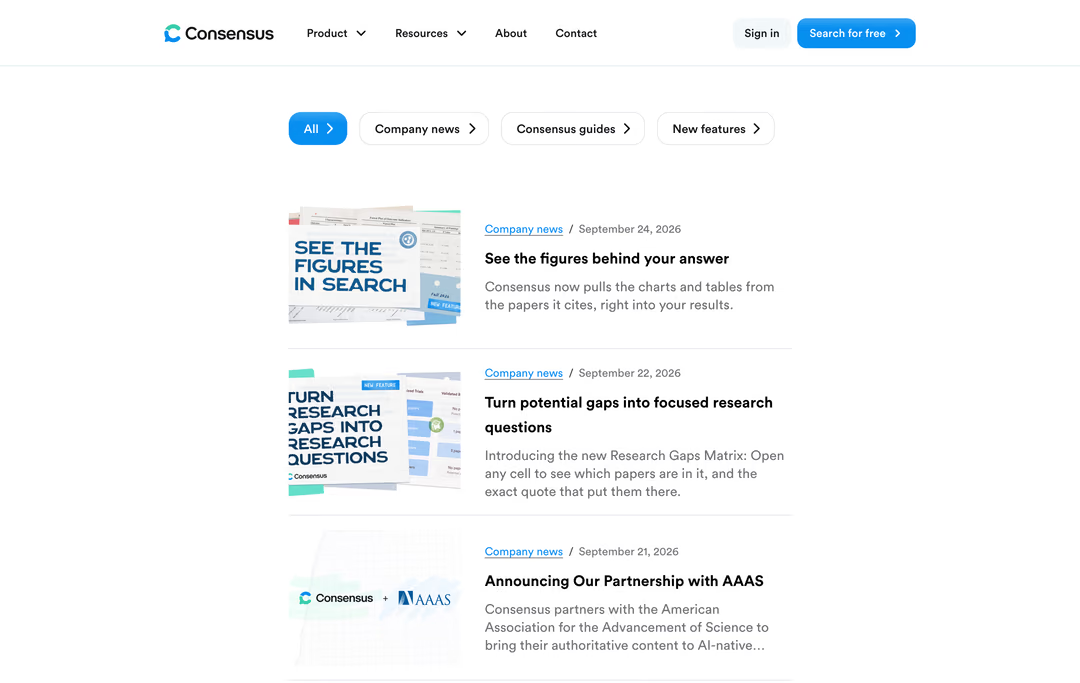
For Consensus, the WordPress-to-Framer move included distinct structures for posts, resources and authors.
Before importing the whole collection, prove each type with a sample. Include a long article, unusual media and an entry with linked records. Check the result on a phone and ask an editor to update it.
A broken author link is cheaper to fix in the pattern than in hundreds of imported pages.
Who can approve the launch? Who controls the domain and hosting? When do content edits pause, and how do late changes reach the new site?
Keep the previous release and a verified content backup. Agree what would stop the launch, who decides and how new content and enquiries would be preserved if you revert.
“Roll back” should mean a recovery route that works.
13
Current siteyour-company.comStays live until the release is checked
Reviewed releaseChecked before the switchRoutesContentEnquiries
Live
Return to the verified previous release
14
1Start at an old address/old-centre
2It reaches the intended content/locations/centre 301
3Follow the call to actionBook a demo
4Verified at the destinationTest enquiry, labelled The message arrived, with its details.
15
Test the routes someone will actually follow
Start at an old address. Confirm it reaches the intended content. Follow the call to action. Verify the enquiry, booking route or download at the destination.
Do this through an agreed, clearly labelled test process. A success message on the page is not enough to establish that an enquiry arrived.
Keep the results with the URL map so the person signing off can see what was checked.
16
Watch the move settle
Save a baseline before launch. Afterwards, check important landing pages, redirect failures, indexing and enquiries alongside any campaign or seasonal changes.
Search engines need time to process a significant move. Investigate specific broken routes and missing pages promptly; do not draw a conclusion from a single quiet day.
Agree who is watching, when the follow-up happens and which unresolved issues remain open.
BaselineBefore launchLaunchThe switchWatchingWho, and when
17
Start while the old site is still available
Bring the existing site, the destination you are considering and any launch deadline. We can
work through what needs to survive before the new design becomes the whole conversation.